A Visit to Cambridge

A Visit to Cambridge

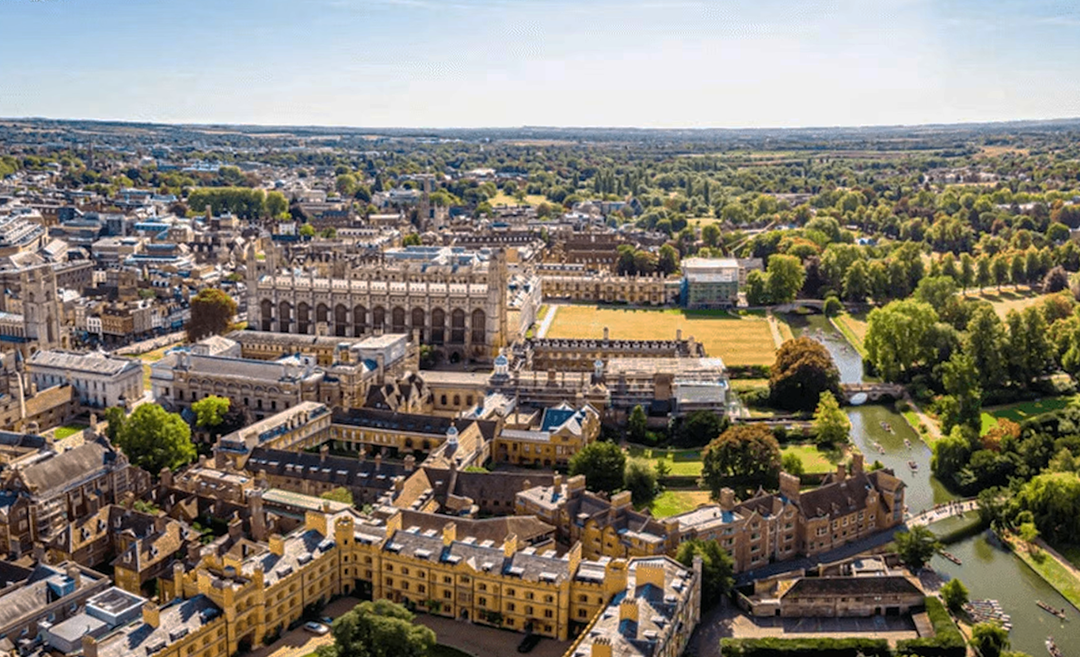
Cambridge – the home of the University of Cambridge, which was founded in 1209 and ranks among the best universities in the world.

Isn’t it wonderful when a family member lives someplace you want to travel to?

It’s even better when the weather is kind and you can get outside and walk around without having to be huddled under an umbrella… which could often be the case anywhere in Ireland or the U.K.

As it happened, Kevin and I went to Cambridge for a McGrath family gathering in May — just an overnight stay — in a place sister Veronica recommended very close to her home. After all, she has lived there for 46 years, so she would know just the perfect place for us.

We checked into The Fellows House and discovered they had underground parking. Oh happy day. A handy lift took us up to our suite where our Key Card allowed us to “Unlock the secrets of the universe” — so we tapped ourselves right in. Even the key card sleeve holds some astonishing wisdom: “Those who can imagine anything can create the impossible.” – A quote from Alan Turing. I already think Cambridge is a great place.


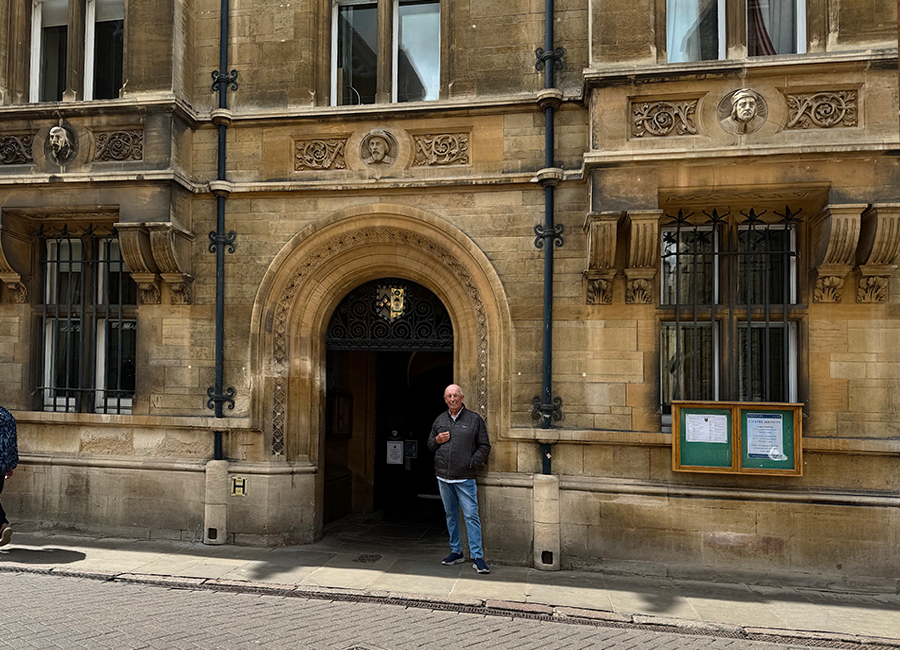
Kevin standing in front of Gonville & Caius College

After our sumptuous meal with the McGrath clan, it was the next day, before our flight back to Dublin, that Kevin and I were able to stroll into the heart of the town from Veronica’s house. Kevin had been many times before since his daugther, Nicola, studied for three years at Gonville & Caius College. Caius is pronounced “Keys” and it is one of the oldest of 31 constituent Colleges that comprise the university. Founded in 1348, it is particularly esteemed for excellence in medicine. Along with producing 15 Nobel Prize winners, it counts the physicist Stephen Hawking among its famous alumni.

It was fun to explore even a tiny bit of Cambridge University, which their website claims is the fourth-oldest in the world, having been established in 1209. How did it come about? A group of scholars left Oxford following a dispute and settled in the town of Cambridge. 


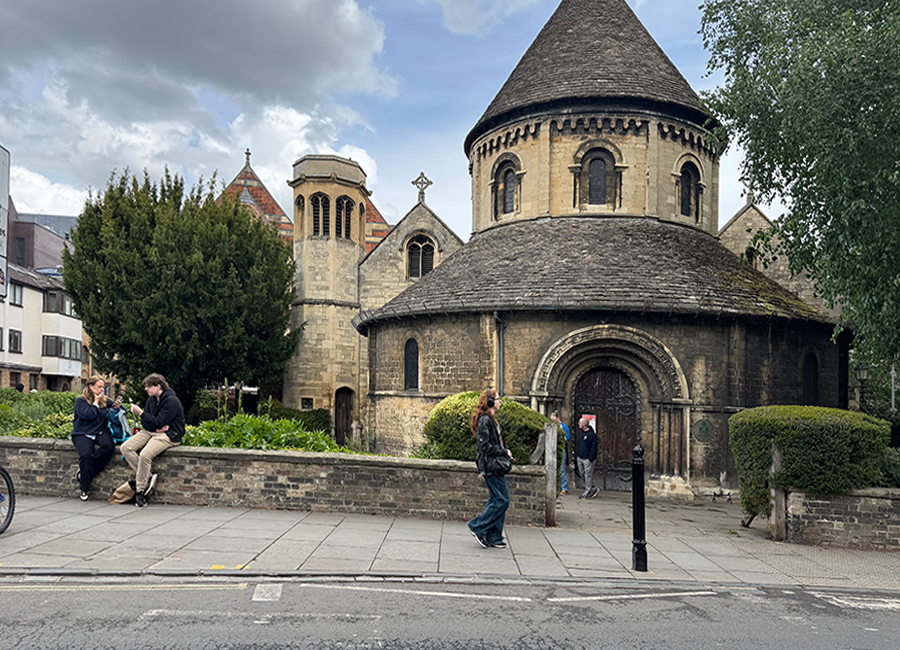
A rare 12th-century Norman landmark, the Round Church was built around 1130 by the Fraternity of the Holy Sepulchre

The thing about old, well established and maintained places like Cambridge is that anywhere you look you’re seeing something marvelous and often a testament to long history. The iconic Round Church building was built circa1130, around which later the university was built. It is one of only four surviving medieval round churches in England. 


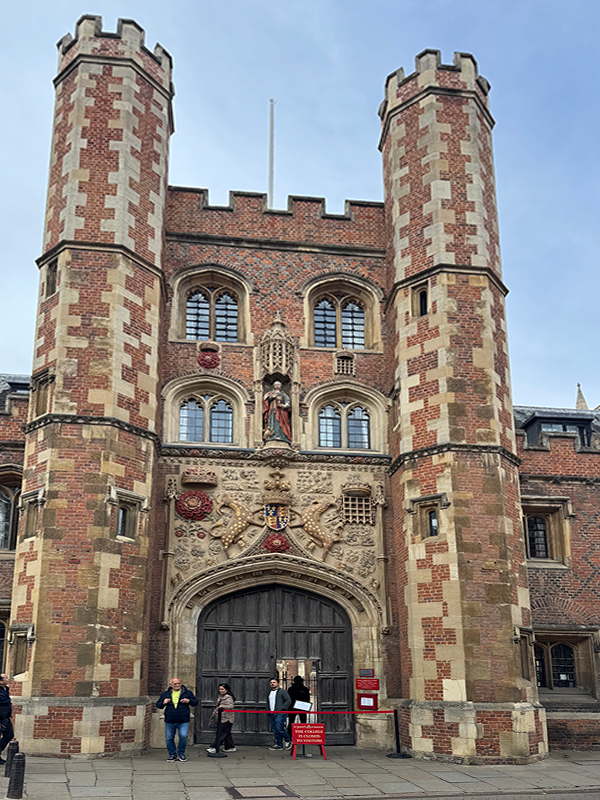
The main gatehouse of St. John’s College is adorned with the arms of the foundress Lady Margaret Beaufort. You can also see the Red Rose of Lancaster and Portcullis.

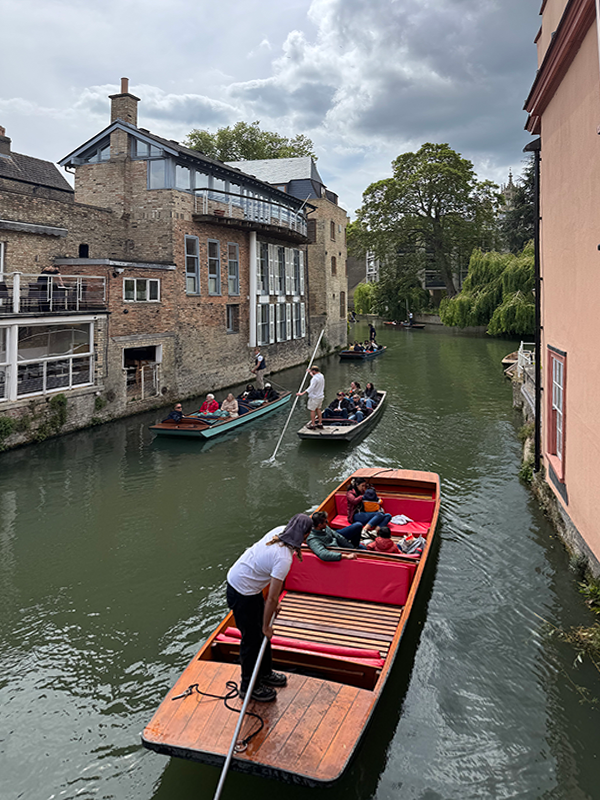
People punting on the river Cam. A “punt” is a flat-bottomed wooden boat, propelled with a long pole against the riverbed.

See what one hour of wandering around the town inspired? Perhaps the thing that amused me the most was seeing the little boats known as “punts” gliding along the River Cam. The river has its own story.

Cambridge’s original Anglo-Saxon name was Grantebrycge, which literally meant “bridge over the river Granta”. After centuries of Norman influence there was a linguistic shift and it evolved to become Cambridge. When the town’s name changed to Cambridge, people assumed the river that cuts through the city was called the Cam. Interestingly, further upstream it is still called the Granta.

In Palm Heaven

In Palm Heaven

Aerial of the Vintage Club in Palm Desert

Golf paradise in California desert

From Palm Springs to Rancho Mirage to Palm Desert to Indian Wells to La Quinta, it’s one long stretch of gorgeous golf environments populated with a million palm trees. Then, of course, you have the car dealerships that crowd Hwy 111 that include all the high-end marks from Mercedes to Aston Martin to Rolls Royce to Ferrari. Sprinkle in a generous number of Starbucks and grocery stores along the corridor and you can find anything you could possibly need and dozens of things you don’t need.

The whole string of little cities is heavenly, if you like palm trees, that is. They symbolize paradise and serenity. Plus, they are always green. There’s an amazing variety of species but the super tall ones with a crown of vibrant green fronds evoke a luxurious atmosphere to me.

I always laugh when people say, “Oh, you’re going to The Desert?” Well, I live in the desert in Scottsdale, so, yes, I’m going from the desert to THE desert.


Palms of the Coachella Valley

However, there is much more lush green grass here since the Coachella Valley can draw water from a massive underground aquifer. The early developers tuned into the appeal of a ribbon of lawn-like golf holes threaded through a real estate community to produce a winning formula.

Like the iconic Magnolia Lane of Augusta, magnificent palm trees lining an entrance signifies you are someplace special. Even the shopping mall builders have adopted this visual language because they know how enticing it is.


Coachella Valley palms

The stars at The Vintage Club

The temperatures are just right for outdoor dining and music at night.

The stars at The Vintage Club were mesmerizing along with extraordinary wine and food. I asked our hosts what are those two extremely bright stars…is one of them Venus? “No, they are probably satellites.” Oh. That’s amazing. I had no idea those bright points of light could be visible while we were dining al fresco.

The dry desert air was crisp and cool but several moveable heaters circled our table and directed enough warmth to make drinking an extraordinary red wine go down that much smoother.

Besides visiting with old friends who we haven’t seen in over eight years, how would I know I was in California? How about experiencing my first earthquake!

We were having dinner with a lovely couple at Ruth’s Chris and just as I felt the tremor in my feet, the water glasses on the table started shaking. Our friends as well as everyone else in the sumptuous dining room did not miss a beat. Ho hum. Just a regular thing like a sunrise or a sunset.

Dining outdoors at the Vintage Club

2019 ‘Ma Danseuse’ from Peter Michael
Winery Pinot Noir with wine decanter

Golfing for every challenge level

Golf with our host as PGA West Citrus Course was fun but the Pete Dye course was a bit too challenging for me. The legendary architect certainly got the beauty factor just right on this most choice piece of land he was given to work with.

No great scores but I finished with the same two balls I started with…keeping them dry the whole round. Playing the Palm Valley Country Club with our next host allowed me another rare opportunity to chase those same two little white balls around, find some pars on the friendlier Ted Robinson course. 


PGA West Citrus Course, La Quinta 

Spending a couple of hours at the American Express tournament and catching up with Séamus Power on the 17th was really fun. Kevin had played with him when the title sponsor was Career Builder and Séamus was an unknown Irish golfer on the PGA Tour. 

The American Express PGA Tour event has had many title sponsors over the years, however it started as the Bob Hope Classic and many of us still refer to it as the ‘Hope’.

Starting in 1960, Arnold Palmer won the Bob Hope Classic five times and he is the only 5-time winner of the event. Palmer’s last victory was in 1973. It’s no wonder Arnie made the Tradition Golf Club in La Quinta his winter home, having designed the course in 1996.

Séamus Power putting on 18th green of Stadium Course at American Express tournament

Bob Hope badges inside case of clubhouse at PGA West

Finding time for art

Kevin and I had just enough time to swing by Heather James Fine Art on Portola Avenue in Palm Desert before we headed back over to Avenue 52. While it is a gallery where everything is for sale, it feels more like a museum. The Winslow Homer (1836 – 1910) Girl Standing in the Wheat Field painted in 1873 spoke to me.

This summation from the Heather James website describes the glowing light and serene setting:

Among the many other paintings inspired by the region, Girl Standing in the
Wheatfield is rich in sentiment, but not over sentimentalized. It directly
relates to an 1866 study painted in France entitled, In the Wheatfields, and
another, painted the following year after he returned to America. But Homer
would have undoubtedly been most proud of this one. It is a portrait, a
costume study, a genre painting in the great tradition of European pastoral
painting, and a dramatically backlit, atmospheric tour de force steeped in
the quickly fading gloaming hour light buoyed with lambent, flowery notes
and wheat spike touches.

The Winslow Homer (1836 – 1910) Girl Standing in the Wheat Field painted in 1873

Heather James Fine Art Gallery, Palm Desert, CA

Dining at Arnold Palmer restaurant

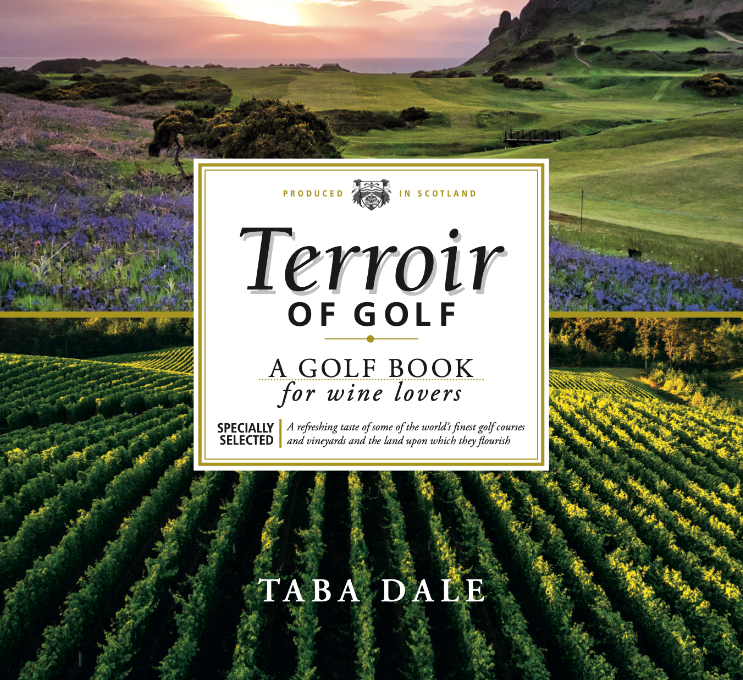
Add in dinner at Arnold Palmer restaurant and we capped off another perfect day in paradise. The main dining room has been significantly remodeled since the photo of it featured in the profile of Arnold Palmer from the Professional Golfers With Their Own Wine Label, is represented in Terroir of Golf.

Kevin’s final round of golf was back at the Citrus Course for a member-guest tournament. Breakfast-golf-lunch with more superb sunshine concluded a fabulous week.

It gave me a chance to take a long walk around a beautiful residential neighborhood. I spotted a couple of trails going through desert toward the mountains to the west but I stuck to the sidewalks where I could see thriving bougainvillea and other flowering plants with birdsong all around me.

Yep. Heaven for me.


Arnold Palmer restaurant – private dining room with framed Green Jacket

Proper Aim of Art

Proper Aim of Art

Dublin – a city of tradition and many contemporary surprises

Dublin is a big city with lots of big city sights and sounds. Tall, decorative street lamps, double-decker bus noise, bicycle stands—the kind where you can rent a bike here and return it elsewhere, a therapeutic clinic on the corner where you can remove your cellulite, and the clip-clop of the touristy horse and carriage. Perhaps all common in the major European capitals, except for the seagulls.

This is indeed a culturally rich city, with many historic and architecturally impressive buildings. A favorite would be The National Gallery, that houses among other treasures, the rare and exquisite Johannes Vermeer c. 1670 “Woman Writing a Letter.”

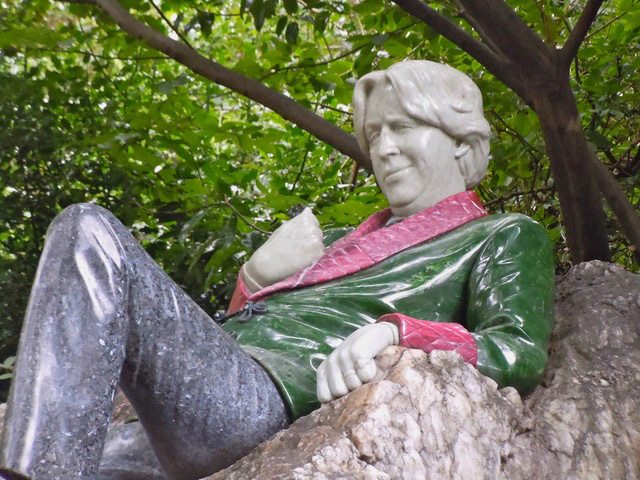
But today I am searching for a remarkable work of art that is not inside this museum — but a short distance away — in the elegant Georgian park known as Merrion Square. You don’t have far to go along the tree-lined path. Then bang! The colorful monument of the flamboyant Oscar Fingal O’Flahertie Wills Wilde (1854-1900) looms powerfully before you.


Oscar Wilde by Danny Osborne

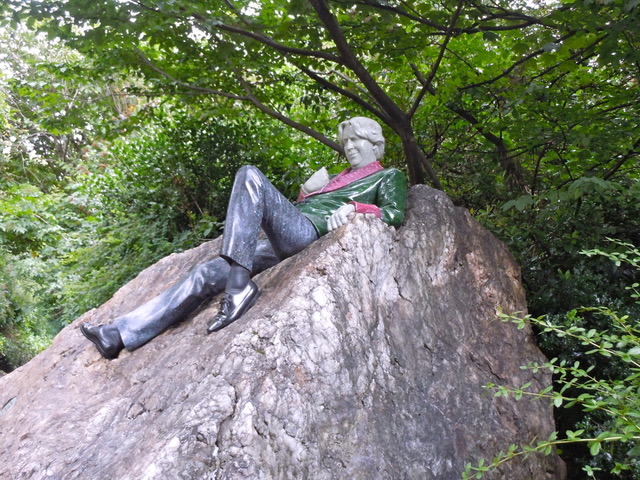
This larger-than-life-size, three-dimensional portrait of Oscar Wilde features him sprawled high on a thirty-ton piece of white quartz, with a devilish look on his face. The rock is situated across the street from his childhood home, where the family moved in 1855. He is staring across the road to where he lived, as his family were key-holders to the enclosed park, and he would have played often in this very spot as a young boy.


Larger-than-life-size sculpture portrait of Oscar Wilde by Danny Osborne


This is a truly beautiful work of art of a man who himself adored beautiful stone and materials. Starting with his shiny black, laced-up shoes made of black Indian granite, the stone sculpture of the dapper dresser takes on more color with his green jade velvet smoking jacket, adorned by quilted pink cuffs and a shawl collar, made of a beautiful stone from Norway. His face and hands are expertly carved from the pale jadeite that the artist brought back from Guatemala. It is a very hard stone, carved with high quality diamond tools and polished to perfection. Two rings are visible on his left hand.

Radiating both the wit and insouciance of Wilde, there is not even a hint that the life of this brilliant man came to an all too early tragic end at the age of forty six.

The National Gallery, Dublin, Ireland

Oscar Wilde, Sculptor: Danny Osborne

An oval-shaped bronze plaque informs us that the work is by Danny Osborne and was commissioned by Guinness Ireland Group. It was unveiled by Merlin Holland on October 28,1997. Osborne reveals in a 2010 interview that the two stone pillars accompanying the sculpture, which are covered in famous Oscar Wilde quotations, were chosen by people associated with the Irish art world and written in their own hand. Some are in block letters, some in almost illegible script.


A selection that I could make out:

“Beauty has as many meanings as man has moods.

It seems to me we all look at Nature too much and live with her too little.

A cynic is a man who know knows the price of everything and the value of nothing.

Life is not complex. We are complex. Life is simple and the simple thing is the right thing.

Experience is the name everyone gives to his mistakes.

I can resist everything but temptation.

There is only one thing in the world worse than being talked about, and that is not being talked about.

This suspense is terrible. I hope it will last.”


And one of my most favorite of all:

“Lying, the beautiful telling of untrue things, is the proper aim of art.”

Connemara

Connemara

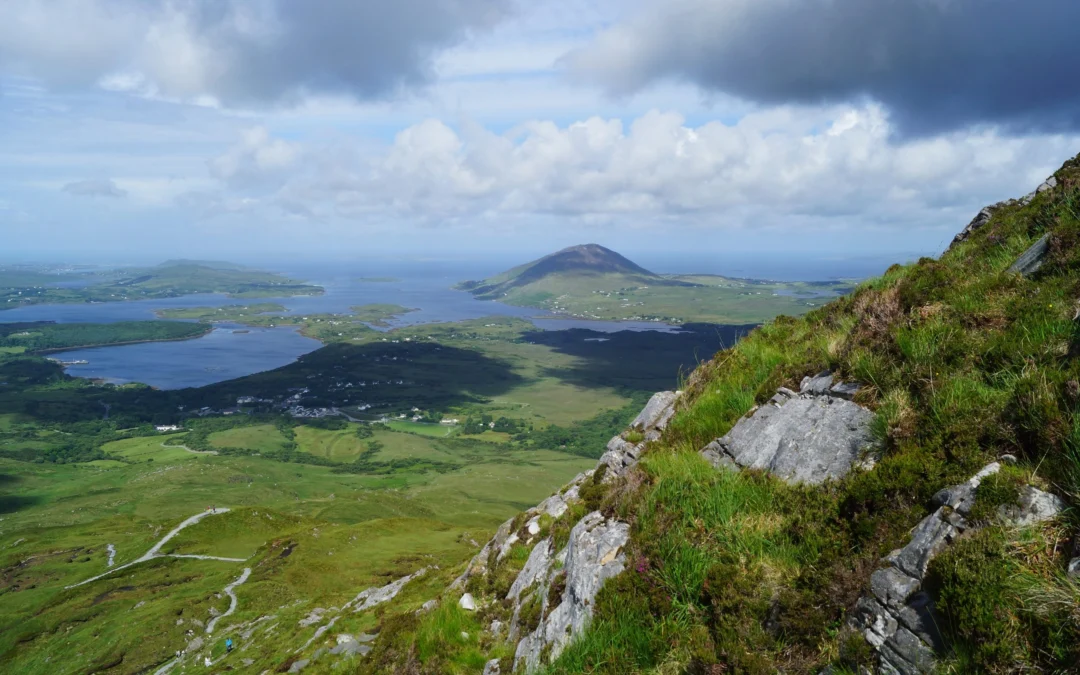
Connemara National Park covers 2,957 hectares of scenic mountains, expanses of blanket bogs, native heaths, grasslands and woodlands.

My first visit to Connemara was back in 2015. I remember specifically driving through Maams Cross and asking Kevin, “Where is the cross?” I expected to see a High Cross with intricately carved symbols, soaring 20 feet, marking a boundary of a significant territory. Alas, there was no cross.


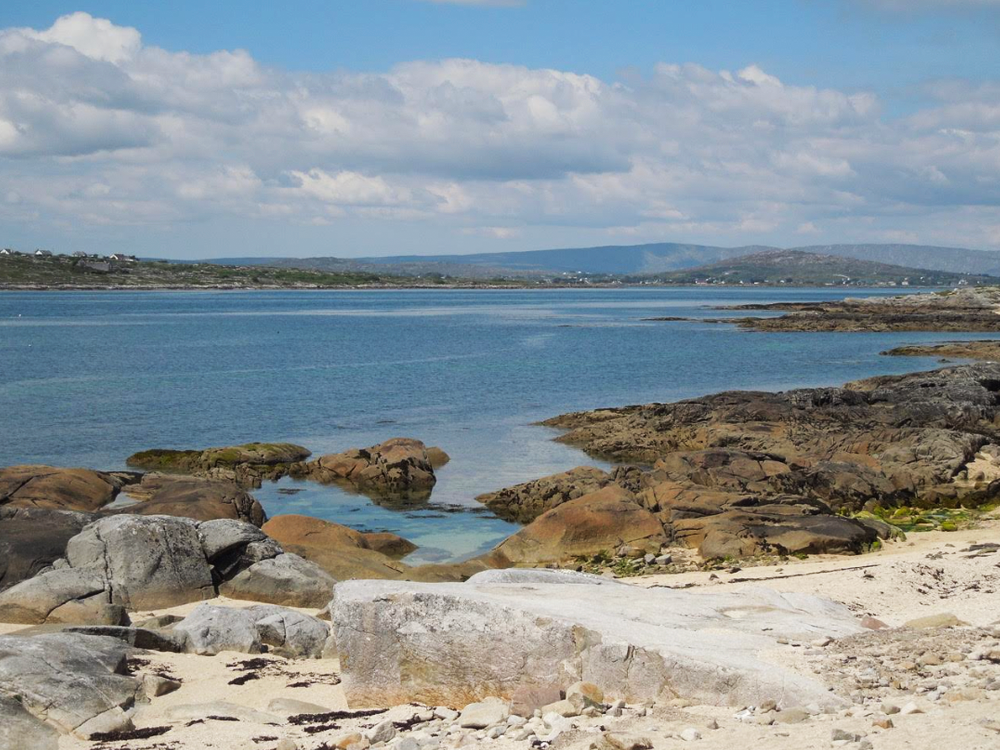
The coastline of Connemara is known for hidden coves and rocky inlets

I loved the raw beauty, just as I did this time, when we drove up from Clare to visit with our friend Ronan Garvey. He apparently fell in love with this staggeringly beautiful rugged land several years ago and decided to build a house there. Connemara has such a unique combination of farmland and rocky geological features. Even while it was raining and misty, the magical was tugging at my heart. Look at me! Try to, anyway.


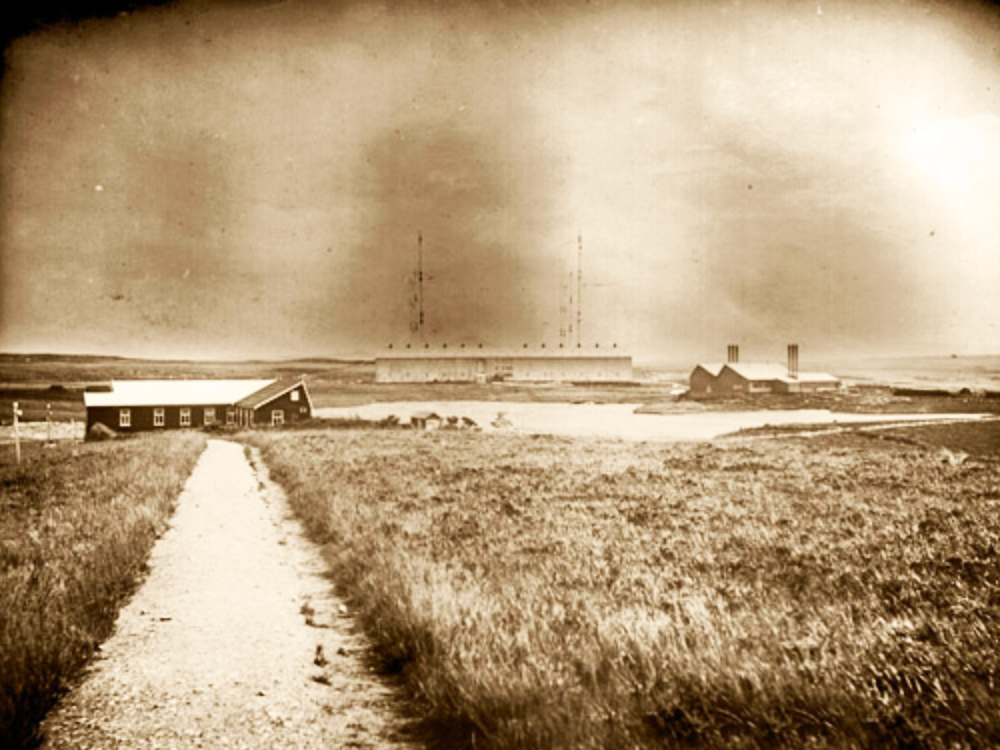
Marconi station in Clifden, 1907

One thing I did not know about until now was the role of Connemara in Guglielmo Marconi’s experiments. He was famous for inventing the wireless telegraph system, culminating in the first transatlantic wire signal in 1901. Marconi built his high-power transatlantic telegraph station near Clifden in 1907, which sent the first commercial wireless signals across the Atlantic to Canada. His contributions to wireless telegraphy led to being awarded the 1909 Noble Prize in Physics.


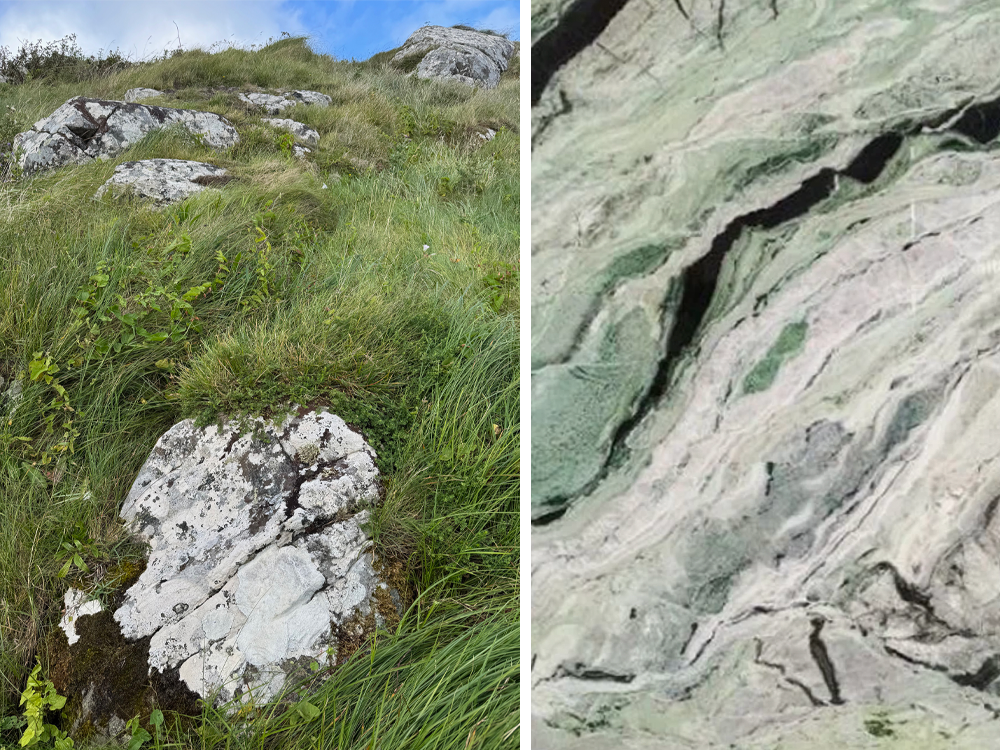
Connemara marble, found only in this region

Another thing I did not know about was Connemara Marble, found only in this region. The pure white rock, riddled with green streaks, is stunning. It is recognized and exported, adorning buildings worldwide.

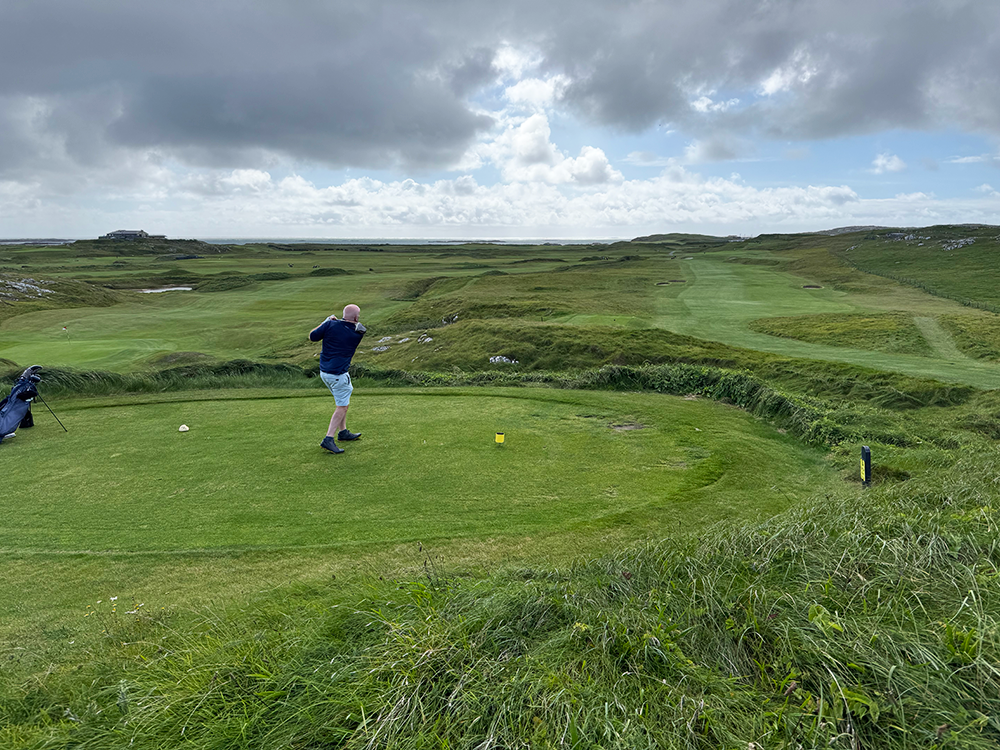
And just where did I see this stone? On Connemara Golf Links, while playing golf with Ronan and his friend Mike O’Hara in late August. We caught it on a perfect dry day. And it made the entire visit extraordinary…just not enough time to try a hike in the Connemara National Park.


Ronan Garvey on 14th tee at Connemara Golf Links

If you are ever wondering WHERE is the Wild Atlantic Way? You will find it in Connemara. This jagged coastline certainly did stir my soul and yank me out of any kind of mundane mentality that permeates our earthly world, if only for a few short hours.


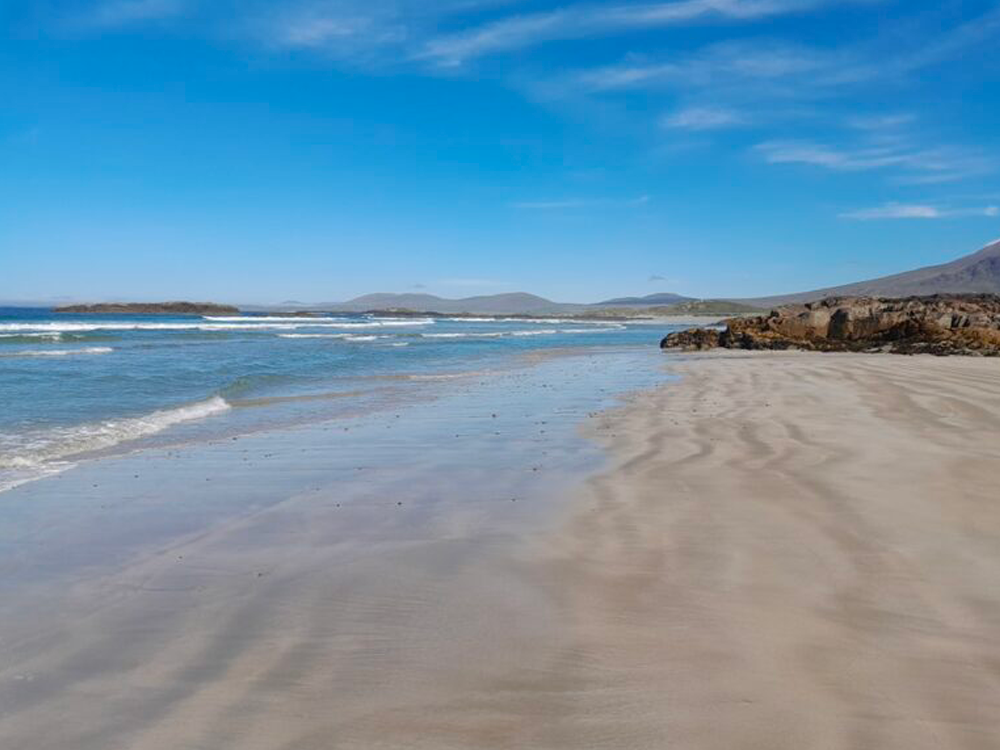
A long stretch of Lettergesh Beach with golden sand contrasts beautifully with the crystal-clear Atlantic waters and scenic mountains beyond.

Wisdom on a Bottle

Wisdom on a Bottle

Beautiful rainbow appeared when we got to 14th tee at Lahinch after a very sudden and heavy downpour.

It’s the wind again. Whistling through a window in the kitchen. Buzzing in a corner of the living room. It’s not usually both at the same time. In fact, neither noise is usually happening when there is just a typical breeze.


Liscannor Bay from Lahinch Golf Club where we played a few days ago, with the castle ruin in the far distance.

However, at night time, we sometimes hear the wind howling on the other side of the house. When we open the window at night, once in awhile, it will even bother Kevin enough to shut the window, since the inside temperature of the house is quite cool anyway.

I’ll be heading back to Scottsdale in two weeks time. I remind myself often how lucky I am to be in Ireland, escaping the scorching heat of the desert in the summer.

Whether the sea looks completely calm or the water is roiling with white caps, I tell myself to appreciate it either way. Even if the sea is choppy and turbulent, soon my view will be of solid granite mountains, and the deep blue sky where there is no sense of unrest.


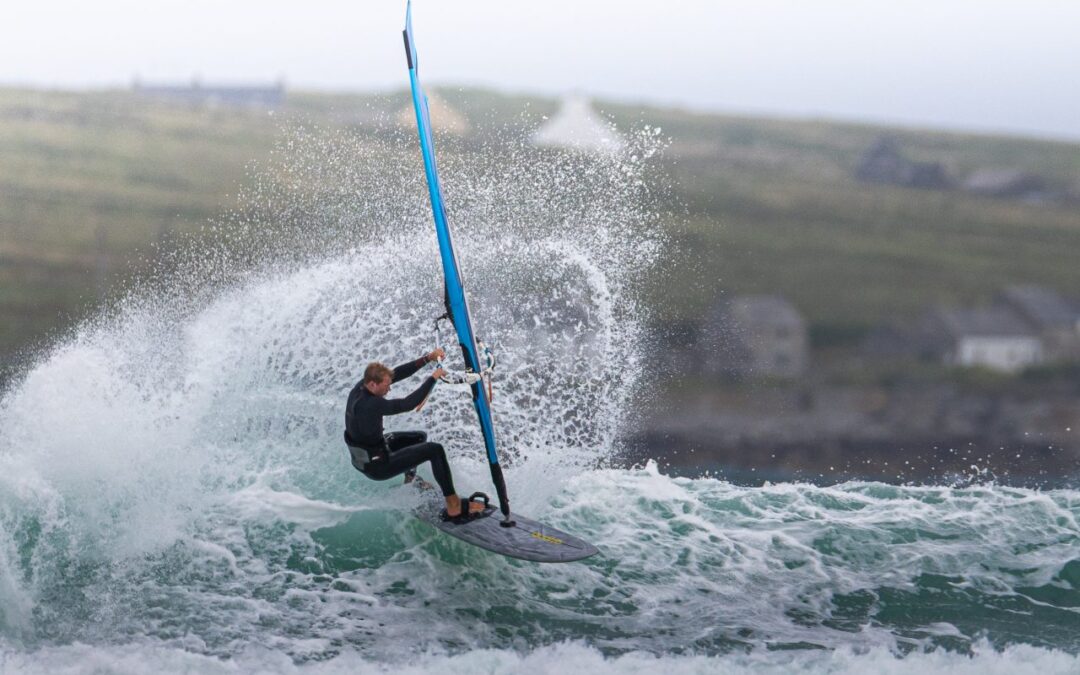
High winds and waves hitting hard the County Clare seashore.

Unless, that is, there is a dramatic monsoon storm with powerful superbolt lightning strikes and fierce wind. Then the big sky country is agitated and chaotic. The booming thunder can probably be heard over the entire Valley, frightening every creature large and small. It’s rare and sensational. Spectacular, even.

But then, while gazing out the window, I pick up a bottle of W.B. Yeats Artesian Water and find this profound message on the label: THE WORLD IS FULL OF MAGIC THINGS, PATIENTLY WAITING FOR OUR SENSES TO GROW SHARPER. – W.B. Yeats

That’s right, I’m holding this wisdom on a bottle in my hand. How brilliant of the marketing arm of this Irish bottling company to use the image and quote of the 1923 Nobel laureate to deliver enlightenment along with quenching our thirst.

Wonders will never cease.


However wisdom reaches us, it is always a good moment in life!